
Making it easier to make a difference.

November is a season of gratitude. As we gather with family and friends and reflect on what we're thankful for, it's also a natural opportunity for nonprofit organizations to recognize the people who make their work possible.
For nonprofits, donors are more than a source of financial support. They're partners in your mission. Their generosity, trust, and commitment help turn your organization's vision into meaningful impact.
And while this time of year brings a flurry of fundraising campaigns, year-end appeals, and planning for the year ahead, it's important not to overlook one of the most valuable opportunities to strengthen donor relationships: simply saying thank you.
A thoughtful acknowledgment can go a long way toward making donors feel valued, appreciated, and connected to the mission they've chosen to support.
A Tax Receipt Is Just the Beginning
Providing timely, accurate tax receipts is an essential part of donor stewardship. But a tax receipt and a meaningful thank-you serve two very different purposes.
A tax receipt documents a transaction. A personal thank-you recognizes the person behind it.
Whether it's a first-time contribution, a recurring monthly gift, or a significant investment in your mission, every donation represents a decision to support your organization. Taking the time to acknowledge that decision can help turn a single gift into a lasting relationship.
And while larger donors may naturally receive more personalized attention, don't overlook the smaller or first-time gifts. Today's modest donor may become one of tomorrow's most committed supporters.
Make Gratitude Part of Your Process
One of the most common challenges nonprofits face isn't a lack of appreciation for their donors. It's finding the time and creating the structure to express that appreciation consistently.
That's why a thoughtful donor acknowledgment strategy should be supported by clear processes and systems.
Consider building a stewardship process that includes:
- Timely acknowledgments: Ensure every donor receives a prompt acknowledgment following their gift. Perhaps, aim to acknowledge gifts within 48 hours.
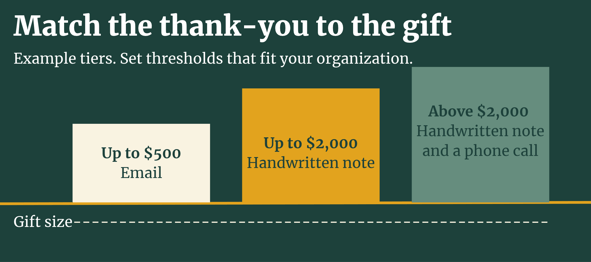
- Personalized follow-up: Establish guidelines for when a personal email, phone call, or handwritten note is appropriate. For example, an organization might set tiers such as gifts up to $500 receive an email, gifts up to $2,000 receive a handwritten note, and gifts above $2,000 receive a handwritten note and a phone call.
- Clear responsibilities: Identify who is responsible for thanking donors, particularly those with established relationships with your fundraising team. Determine at what point leadership personally reaches out.
- Automated reminders: Use your donor management system to notify staff of new gifts and create follow-up tasks so opportunities don't get missed.
- Meaningful impact updates: Follow up beyond the initial thank-you to share how donor support is advancing your mission.
The goal isn't to make donor appreciation feel automated or impersonal. Quite the opposite. The right systems make it easier for your team to deliver a personal touch, consistently and at scale.
Don't Underestimate the Personal Touch
In a world filled with automated emails and digital communications, a personal gesture can stand out.
A quick phone call from a development officer, a thoughtful email referencing a donor's interests, or a handwritten thank-you note can communicate something that a standard acknowledgment often cannot: We know who you are, we appreciate your support, and you matter to our organization.
These gestures don't need to be elaborate or expensive. Often, the simplest expressions of gratitude are the most memorable.
And while Thanksgiving is a wonderful reminder to express appreciation, donor stewardship should continue throughout the year. Consistent, meaningful communication helps strengthen relationships long after the initial gift.
Put the Right Support Behind Your Thank-You
Consistent donor appreciation takes coordination. Accurate gift records, clear responsibilities, and timely reminders help your team know whom to thank, when to reach out, and how to make each interaction meaningful.
At Bearing Tree, we help nonprofits put these processes into practice, from gift processing to donor management and stewardship workflows, so fundraising teams have more time to build relationships.
Explore how our Development Operations & Research services can support your team.
What This Means for You
As you enter the final weeks of the year, take a moment to consider how your organization expresses gratitude to its supporters.
Are donors receiving timely acknowledgments? Does your fundraising team know when someone in their portfolio makes a gift? Are there opportunities for a personal phone call or handwritten note that might otherwise get overlooked?
Most importantly, do your donors hear from you only when you're asking for support, or do you make time to thank them for the difference they're already making?
A little intentionality, supported by the right systems and processes, can meaningfully shape how donors experience their relationship with your organization.
This Thanksgiving season, we encourage you to take the time to say thank you - and to make gratitude a priority throughout the year.
At Bearing Tree, we're grateful for the opportunity to support organizations doing important work every day. We're proud to help manage the details behind the scenes so you can spend more time building the relationships that make your mission possible.
That's how we help make it easier to make a difference.
Leave a Reply
Your email address will not be published. Required fields are marked *